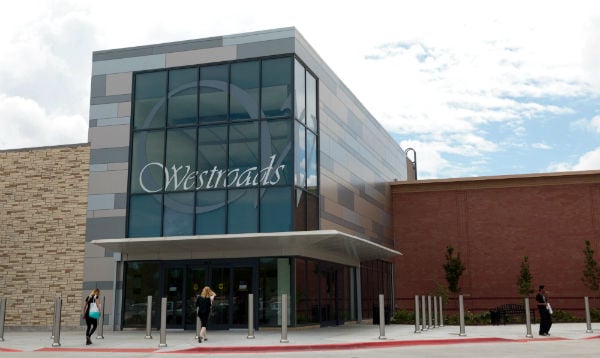
In Omaha we had Baker's and Albertsons as the major supermarkets. Here we have Dominick's and Jewel. In Omaha I would go down 114th and Dodge on summer nights to get a Dairy Queen or meet friends at the Burger King. No different here - just drive down Elmhurst. In Omaha I used to take the bus to Westroads Shopping Center to go to a movie with friends or shop for stuff. Same here - the Pace 208 Route is literally two blocks away and will take you straight to Woodfield. My kids do the same.
Reflecting on places I've been in the past couple years, West Omaha and the Northwest Suburbs of Chicago don't really look that much different than other places I've been: Colorado Springs, Tucson, Rockford, Indianapolis, Louisville, St. Louis, Lincoln. Sure, each place has its iconic landmark (Air Force Academy, Gateway Arch, State Capitol, etc.), but the rest of the outlying area is strip mall after strip mall after strip mall. Yawn. Even in Puerto Rico, I was astounded at the number of strip malls in suburban San Juan and Caguas. You wouldn't believe how many K-Marts and Church's Chicken restaurants are there!
Another aspect of the suburban landscape that I have been pondering is the relative impermanence of structures. Buildings out here just aren't made with "forever" in mind. I look at the lot on Busse Highway and Greenwood in Park Ridge: There used to be a thriving auto dealership there; now there's a gravel lot. I look at the huge vacant lot off Northwest Highway where the Littelfuse factory used to be. They've moved, but I can't help thinking about the space - all the conversations, all the hours spent there, all the energy that was once concentrated in that space now quiet and desolate. What out here is built to last? What out here will stay? What out here can we count on as permanent?
So as I was putting together the list of book-length arguments for class, James Howard Kunstler's The Geography of Nowhere definitely caught my attention. The questions I hope to find answers to are embedded in my fascination with and aversion to the homogeneity and impermanence of the suburban landscape. Even more importantly, what does this say about us, the people who live and work in the American suburbs? What values or beliefs are reflected in the way we plan, build, use, and dispose of our commercial and community structures?
Is any hope for the future here? As developments like Randhurst Village are re-purposing commercial properties for a more "Main Street" feel, even these developments have the exact same vibe as the one in the next suburb (Streets of Woodfield, Deer Park Town Center, etc.). I am looking forward to seeing what, if anything, is being done in some communities to reclaim a unique sense of commercial and community identity.
- - - - - - - - - - - - - - - - - - - - - - - - - - - - - - - - - - - - - - - - - - - - - - - -
Extra: Here's James Howard Kunstler appearing on the Colbert Report in 2008:
